Overview
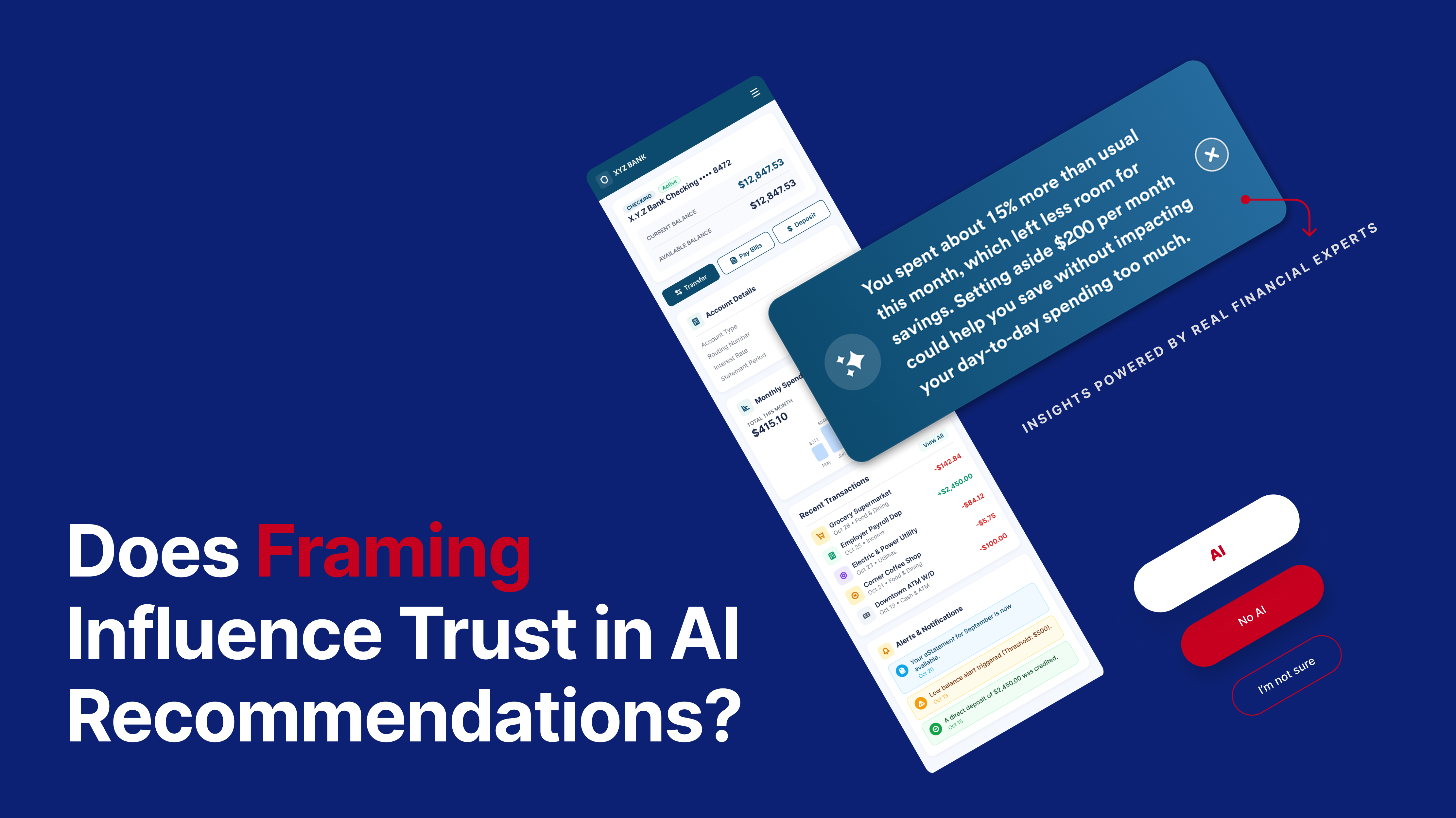
As part of my work at a financial institution, I was tasked with exploring how artificial intelligence was being integrated across its different processes. I became very interested in the space of user-facing artificial intelligence tools. As AI becomes increasingly embedded into financial products, companies face an important design question:
How do we increase users’ trust in artificial intelligence; can framing influence user perception of AI, and increase it?
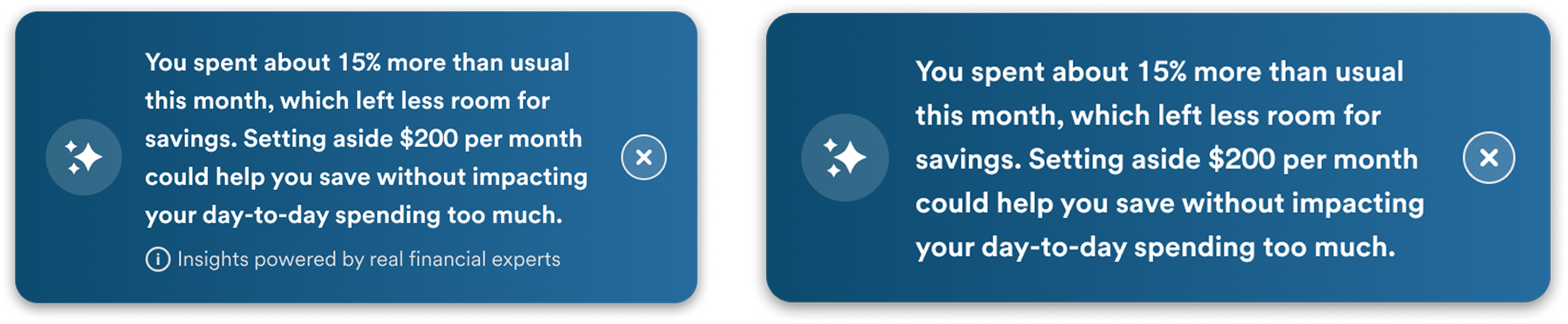
Existing financial products (like the SoFi tools coach) already use phrases like: backed by financial experts, powered by human insight, and designed with financial planners, on their platforms.
But we wanted to study whether this language actually changes how people perceive AI recommendations, or whether it simply creates confusion. This project explored whether subtle messaging changes could influence users' trust, willingness to act on artifical intelligence recommendations, and perceptions of AI tools without changing products themselves.
Rather than redesigning functionality, I focused on something less visible but equally important: the psychology of product framing.
Research Questions
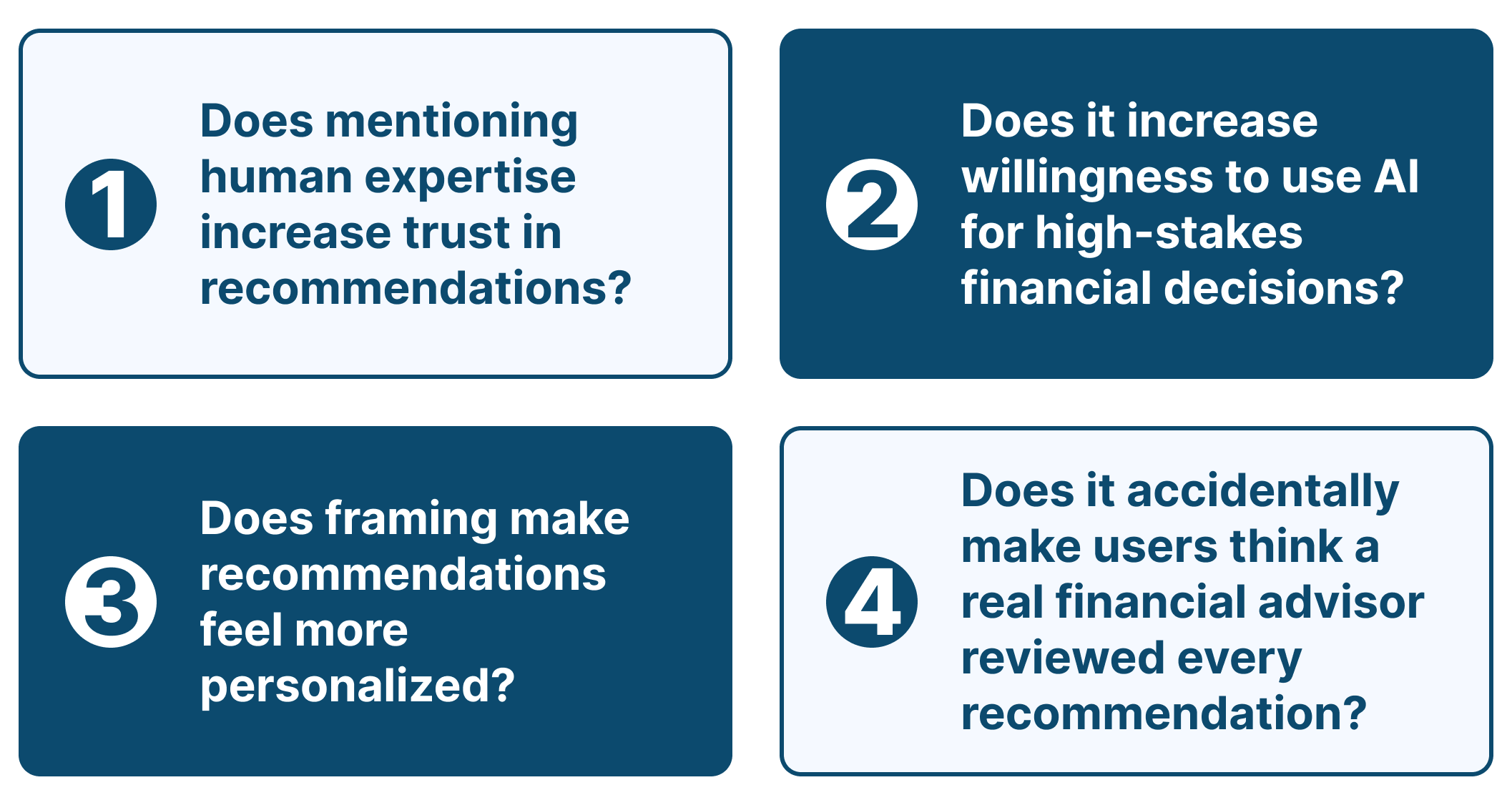
Instead of asking whether AI recommendations are useful, I wanted to understand:
Experiment Design and Methodology
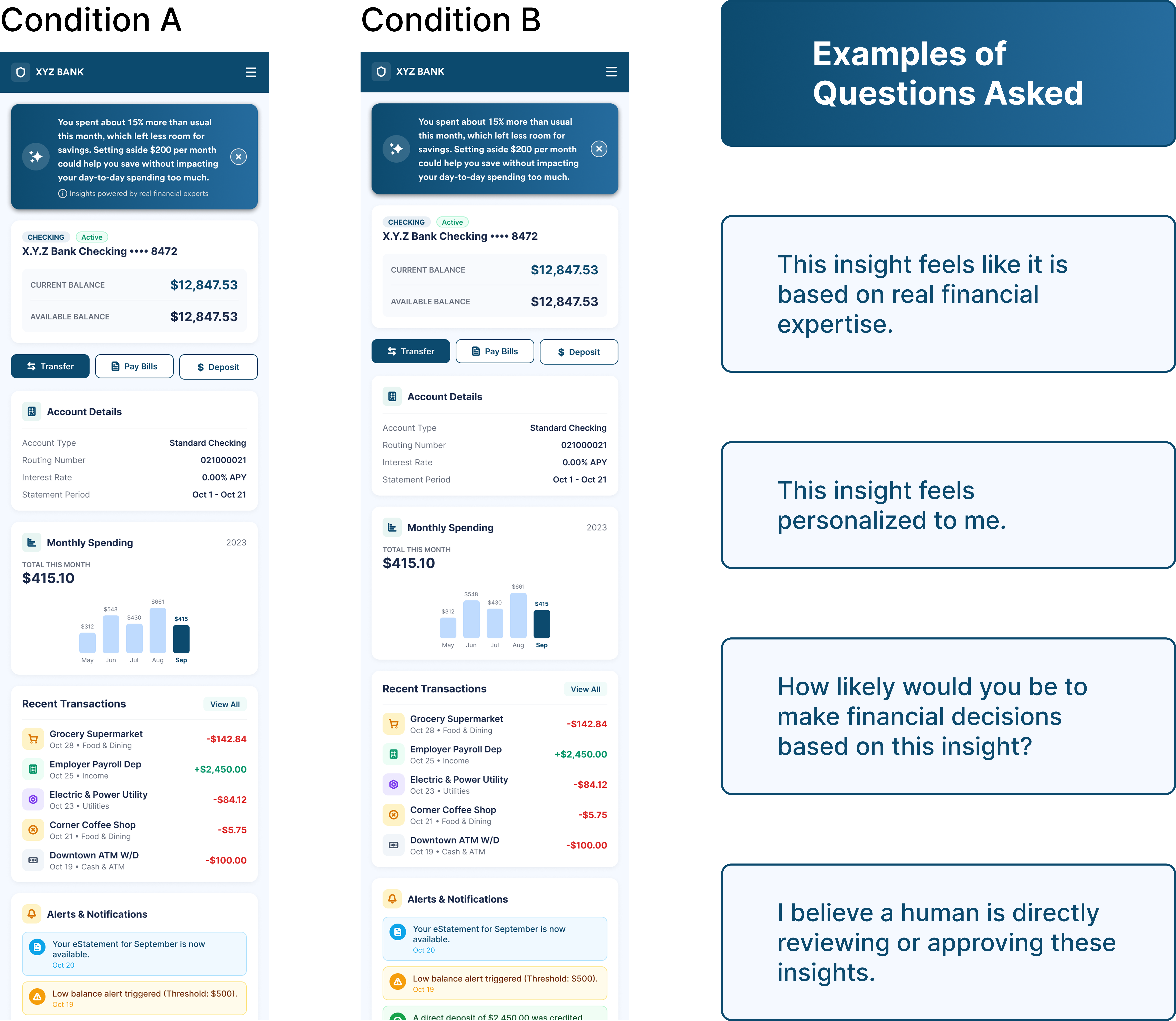
To isolate the impact of messaging alone, every participant viewed the exact same interface. The only difference between conditions was a single line of copy. Everything else remained identical, which allowed us to attribute any differences in perception directly to framing rather than visual design or functionality.
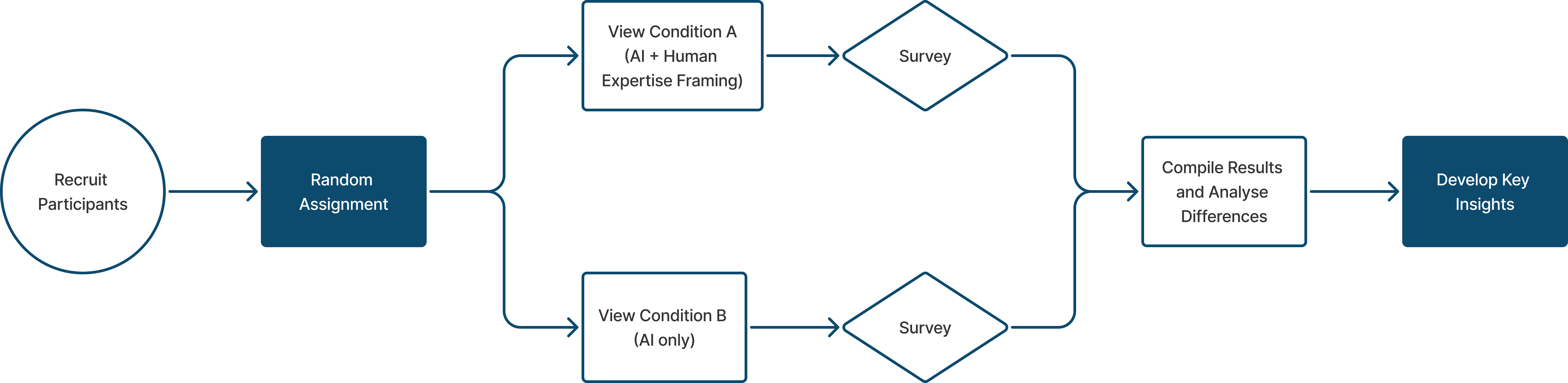
We planned to recruit users from a wide variety of profiles, including financial planners, users with low financial confidence, AI Skeptics, AI Enthusiasts, Budgeting app users, to get a wide variety of information.
Participants were presented with a scenario to visualize: opening their banking app and receiving a personalized financial insight. They then evaluated the recommendation across five dimensions: Personalization, Trust, Behavioral Intent, Credibility, and Human Interpretation.
Results
Key Finding One: Human expertise framing works...
...when users actually notice it.
The framing significantly increased trust among participants who consciously processed the human-backed messaging.
Key Finding Two: The cue may have been too subtle.
Many of the participants never consciously registered the messaging difference. As a result, the overall experimental manipulation was weaker than expected. There are many opportunities for further research on the need for “cue salience,” and defining what sorts of visual cues actually register to users, so companies can really benefit from the effects of framing.
If companies want users to recognize human oversight, the cues need to be visually prominent.
Key Finding Three: Existing comfort toward AI drove many of the trust effects noticed.
One of the strongest predictors of trust wasn't the experimental condition. It was participants' existing comfort with AI. Users who already trusted AI generally rated recommendations more positively regardless of framing.
People's existing beliefs about AI shape product perception more than interface copy alone.
Reflections
Before this project, I thought trust in AI was primarily influenced by interface design, with factors like visual polish and transparency, and comprehensiveness. This study challenged that assumption.
I learned that even tiny wording changes can meaningfully influence perception, but only if users actually notice them. The most surprising finding to me wasn't that human-backed framing increased trust; it was that many participants never consciously processed the treatment at all. This realization shifted my perspective from thinking about copy as content to thinking about copy as a visual design problem.
This project also reinforced the importance of rigorous experimental design. By holding every visual element consistent and manipulating a single line of text, we were able to isolate the psychological impact of the framing itself. The results reminded me that user perception is shaped not only by interface decisions but also by prior beliefs. Many of the trust effects noticed were driven by participants' existing comfort with AI.
This study deepened my appreciation for behavioral research as a design tool. Rather than asking users what they wanted, we measured how subtle product decisions changed behavior and perception. It showed me that effective UX research doesn't always end with a redesigned screen, and sometimes the most valuable outcome is evidence that helps product teams make more informed strategic decisions.